Your cart is empty
Tax included and shipping calculated at checkout

Drawer menu
Tax included and shipping calculated at checkout

A candle can be a soft glow on the coffee table, a familiar scent at the end of a long day, or simply a detail that makes a room feel more like yours. If you’re choosing one for home, you may find yourself weighing soy wax against paraffin.
Neither wax tells the whole story of a candle. How it burns and smells also depends on the wick, fragrance, vessel, and how you use it. Here’s a balanced look at what sets soy wax candles apart from paraffin candles, and how to decide what suits your home.
| Soy wax | Paraffin | |
|---|---|---|
| Source | Made from processed soybean oil, a plant-based material | Refined from petroleum |
| Burn | Often burns more slowly, though the wick and candle design matter | Can burn faster in some formulations; performance varies |
| Soot | Not soot-free; proper wick care and a draft-free spot matter | Not automatically smoky; proper wick care and a draft-free spot matter |
| Scent | Can offer a gentle or full fragrance, depending on the formula | Often used in candles designed for a strong scent throw |
| Appearance | May develop a matte or softly frosted finish | Often has a smooth, even surface |
| Cost | Varies by candle size, ingredients, and how it’s made | Varies by candle size, ingredients, and how it’s made |
These are general tendencies, not promises. A well-designed candle can perform differently from another candle made with the same wax.
Soy wax is made by processing soybean oil into a solid wax. Because soybeans are a crop that can be replanted, soy wax is often chosen by people looking for a plant-based wax. Its color and texture can vary a little, and some soy candles develop a white, frosted look as they cool. This is usually a cosmetic feature.

Paraffin wax is refined from petroleum. It has been used in candles for generations and is common in many types of candle products. Manufacturers can formulate it for different shapes, colors, fragrances, and burning characteristics.
As the National Candle Association’s overview of candle wax explains, candles are made with a range of waxes and blends. The wax is one important part of the candle, but it doesn’t determine every aspect of performance on its own.
A candle’s wick draws up melted wax, which vaporizes and fuels the flame. The design needs to balance the wick, wax, fragrance, and container so the candle burns steadily.
It’s easy to hear that one wax is “soot-free,” but that isn’t a guarantee to rely on. The National Candle Association notes that no candle wax is completely soot-free. A wick that’s too long, a draft from an open window, or a flame disturbed by a vent can contribute to a flickering, smoky burn.
Research comparing soy and paraffin has found differences in soot under specific test conditions. Those results can be useful, but they don’t mean every soy candle will produce less soot than every paraffin candle. The wick and the way the candle is burned matter too. For either wax, trimming the wick and keeping the candle away from drafts are simple ways to encourage a steadier flame.
Soy wax is often associated with a slower burn, and a candle made with soy may last longer than a comparable paraffin candle. But wax alone can’t tell you how many hours a candle will burn. Size, wick, fragrance, vessel, and formulation all affect the result. If you’re shopping for long burning candles, look for burn-time guidance from the maker for that specific product rather than relying on a general rule about wax.
Both waxes need a well-matched wick to create an even melt pool, meaning the layer of melted wax around the flame. If the wick is too small for the vessel, the candle may tunnel, leaving unmelted wax along the sides. A first burn that allows the wax to melt evenly across the top can help reduce tunneling. Follow the candle maker’s care instructions, and don’t burn longer than they recommend.
For more practical tips, see our complete candle care guide.
Scent throw describes how a candle’s fragrance carries through a room. Some paraffin candles are formulated for a stronger, quicker scent throw. Soy candles can also offer a noticeable fragrance, but their performance depends on the fragrance itself, wick, vessel, and how the candle is designed.
A gentle scent isn’t necessarily a sign of a better or cleaner candle, just as a strong scent doesn’t tell you what ingredients it contains. If you prefer a softer atmosphere, a smaller room or a more subtle fragrance may suit you better. If you want scent to reach a larger space, consider the candle’s product details and reviews.
The phrase “non toxic candles” is often used when people are trying to make thoughtful choices for their home. It’s helpful to look beyond the phrase and check what the brand says about the candle’s full formula: wax, wick, and fragrance.
Indoor-air research on candles is limited, and laboratory findings don’t always represent the many ways candles are used in real homes. A 2021 chamber study of scented and unscented candles found differences in emissions between products, underscoring that fragrance and product design can matter. It doesn’t establish that one wax type is automatically harmless or harmful.
Paraffin is refined from petroleum, and some people prefer to avoid petroleum-derived wax. Others choose based on fragrance, appearance, cost, or how a particular candle performs. It’s reasonable to consider your preferences without treating paraffin as inherently toxic or assuming that plant-based wax alone guarantees a particular indoor-air outcome. If you’re sensitive to fragrance, you may prefer an unscented candle, less frequent burning, or good ventilation.
Fragrance is another part of the decision. If phthalates are a concern for you, look for a clear phthalate-free statement rather than assuming a wax type tells you about the scent ingredients. Our guide to phthalates in candles explains what to look for. A candle’s ingredient claims can help you make a more informed choice, but they shouldn’t be treated as a medical benefit.

Soy’s matte finish and occasional frosting can feel at home in a relaxed, natural interior. Paraffin often has a smoother surface and may be used in candles with vivid colors or sculptural shapes. These are broad tendencies; blends and individual formulas can look quite different.
Price isn’t a simple wax-versus-wax comparison either. It reflects more than the raw material: candle size, fragrance, vessel, production scale, and the maker’s process all play a part. A smaller candle may cost less upfront, while a larger one may offer a different value over time. Checking the net weight and the brand’s stated burn time can make comparisons more useful.
A few questions can help narrow it down:
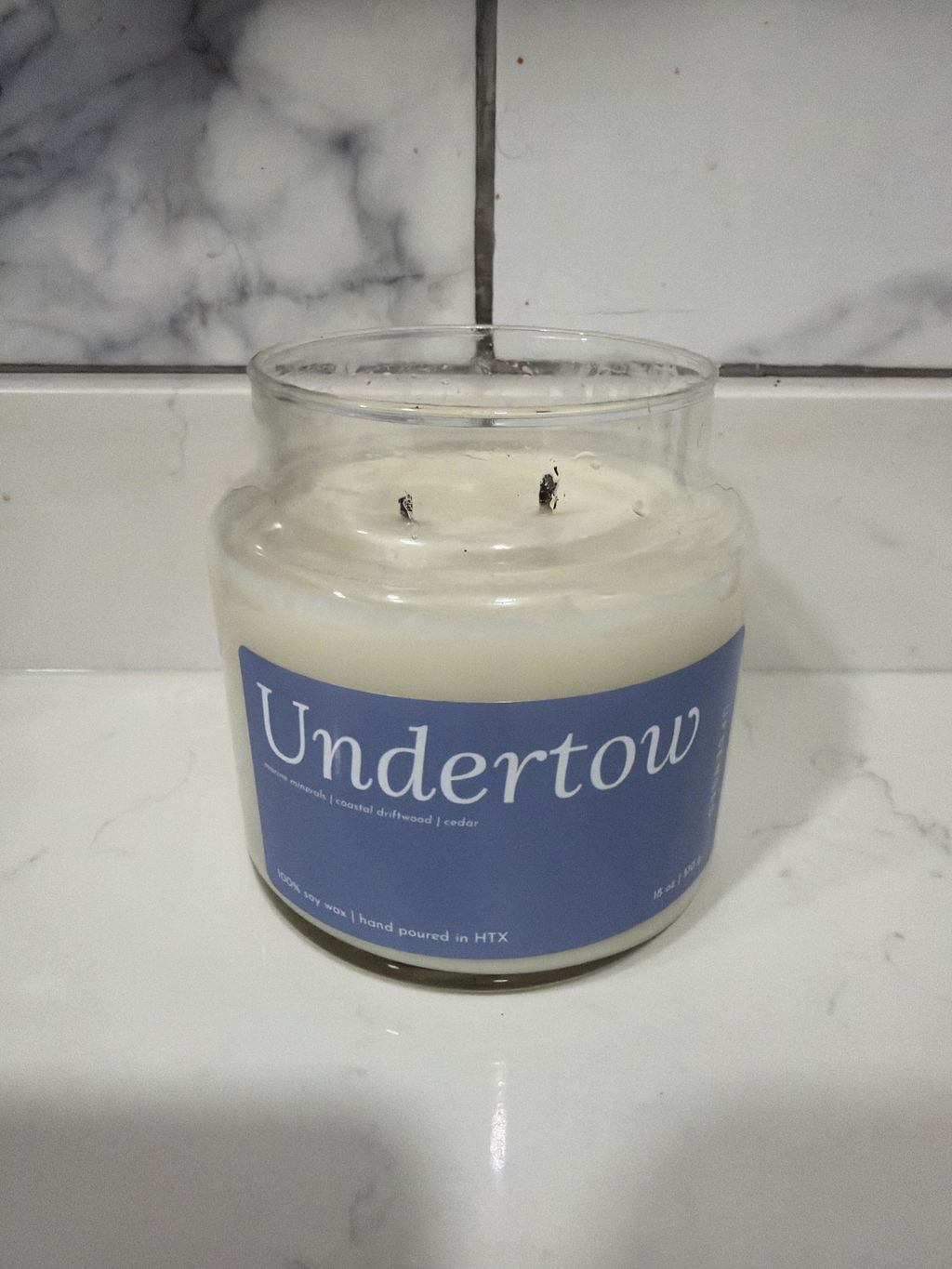
At Upsensed, we make hand-poured candles with 100% US-grown soy wax, 100% cotton wicks, and phthalate-free fragrance. Our fragrance ingredients are free from parabens, carcinogens, reproductive toxins, and mutagens. Each candle is made in small batches in Houston, Texas; we’re a woman-owned business, and 5% of every purchase supports the Anxiety and Depression Association of America. Those choices reflect what matters to us, not a claim that soy is the right choice for every home.
Soy wax may be a good fit if you prefer a plant-based wax and like its softer, natural look. Paraffin may appeal if you find a candle whose scent, appearance, and price suit your preferences. Neither option is automatically the best for everyone, and neither wax alone guarantees a particular burn or air-quality result.
For a closer look at the choices behind our own candles, read why we switched to 100% soy wax. Or, if you’re ready to browse, explore the Upsensed soy candle collection.